


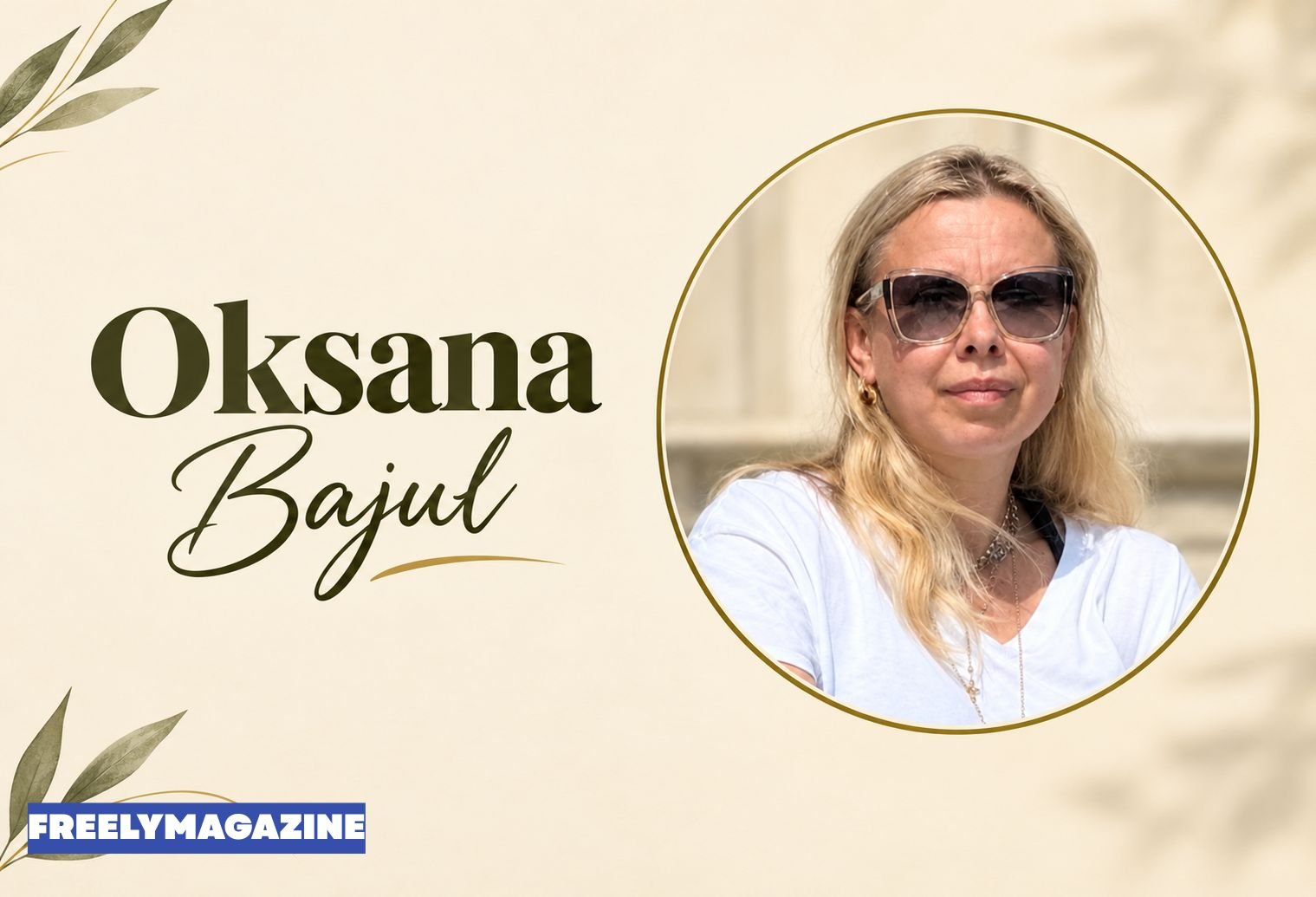
Oksana Bajuł, better known in English as Oksana Baiul, became an Olympic figure skating champion at just 16. The Ukrainian skater won the 1993 World Championships at 15, then took gold at the 1994 Lillehammer Winter Olympics after a practice collision that nearly kept her off the ice. Orphaned at 13, she rose from a struggling Soviet-era rink to global fame. This guide covers her life, rivalries, challenges and what she is doing now.
Oksana Bajuł Quick Facts
| Detail | Information |
| Full name | Oksana Serhiyivna Baiul (Оксана Баюл) |
| Born | November 16, 1977, Dnipropetrovsk (now Dnipro), Ukraine |
| Age | 48 |
| Height | 5 ft 3 in (1.60 m) |
| Discipline | Ladies’ singles figure skating |
| Key coaches | Stanislav Korytek, Galina Zmievskaya |
| Olympic result | Gold, 1994 Lillehammer |
| World title | 1993 Prague |
| Turned professional | 1994 |
| Known for | First Olympic champion of independent Ukraine |
Who Is Oksana Bajuł?
Bajuł vs. Baiul: Understanding the Spelling
“Bajuł” is a Polish-style rendering of her surname. “Baiul” is the standard English transliteration of the Ukrainian Баюл and appears in Olympic records and most media. They refer to the same person.
Why She Is Famous
She combined a rapid rise, ballet-inspired artistry and a dramatic Olympic win. According to Wikipedia, she is the first Olympic champion of independent Ukraine in any sport. Her official site notes she remains the only Ukrainian woman to win Olympic singles gold.
Oksana Bajuł’s Early Life and Childhood
Birth and Family Background
She was born in Dnipropetrovsk, an industrial city in the Ukrainian SSR. Her parents divorced when she was two, and her father, Sergey, left. She was raised by her mother Marina, a French teacher, and her maternal grandparents. She later reunited with her father in 2003.
First Skates and Early Training
Olympics.com says her grandfather bought her first skates when she was about three, and she won her first competition at seven. Some biographies say she began at four. Her grandfather hoped skating would prepare her for ballet. By age five she was training with coach Stanislav Korytek.
Orphaned at 13: Loss and Survival
Her grandfather died in 1987 and her grandmother in 1988. In 1991, her mother died of ovarian cancer when Oksana was 13. She stayed with her coach’s wife, then with friends.
Post-Soviet Ukraine: The World Around Her
The Soviet Union collapsed in 1991, and funding for sports collapsed with it. In March 1992, Korytek left for Toronto because of the lack of support for skating at home.
Coaches and Mentors Who Shaped Her Career
Stanislav Korytek: Her First Coach
Korytek coached her from early childhood until 1992 and built her technical base.
Galina Zmievskaya and the Odesa Years
In August 1992, Galina Zmievskaya accepted her as a student in Odesa and sheltered her in her family’s cramped apartment. Baiul later lived mostly in a dormitory, with expenses covered by the state. Under Zmievskaya she progressed rapidly.
Training Conditions and Hardships
The Odesa rink had no working ice resurfacer, so coaches and skaters often resurfaced the ice by hand. Conditions like these later influenced her decision to turn professional.
Rise to the Top: The 1992–93 Season
Breakthrough at the 1993 European Championships
In Helsinki she won silver behind France’s Surya Bonaly, which marked her arrival among Europe’s elite.
1993 World Champion at 15
Before the Prague World Championships, she crashed into the boards and displaced disks in her back and neck. She also skated on crooked blades because it was too late to change skates. Second after the short program, she won the free skate and the world title, ahead of Bonaly.
Why They Called Her “The Swan of Odesa”
The nickname is popular in fan writing and reflects her balletic style and Swan Lake short program. It is a descriptive epithet, not an official title.
Oksana Bajuł at the 1994 Lillehammer Winter Olympics
The Road to Lillehammer
She arrived as reigning world champion and two-time European silver medalist (1993 Helsinki, 1994 Copenhagen).
The Kerrigan–Harding Media Storm
Coverage was dominated by the Nancy Kerrigan and Tonya Harding scandal, which left the Ukrainian champion largely overlooked.
Short Program Result
She finished second to Kerrigan after the short program.
The Practice Collision and Injury
Before the free skate, she collided with Germany’s Tanja Szewczenko, wrenching her lower back and cutting her right shin, which needed three stitches. She received two Olympic-approved pain-killing injections in her lower back and shoulder to compete.
The Free Skate That Won Gold
She won the free skate on February 25, 1994, and added an extra triple jump late in the program that was not originally planned. Her free skate used a Broadway medley, per the official Olympic report. The US Figure Skating federation notes that the women’s free skate remains the seventh-most-watched non-Super Bowl broadcast in U.S. television history.
Final Results and Scores
| Place | Skater | Country |
| Gold | Oksana Baiul | Ukraine |
| Silver | Nancy Kerrigan | USA |
| Bronze | Chen Lu | China |
The margin was razor-thin and sparked debate. The referee defended the result, saying Baiul skated artistically and with engagement while Kerrigan skated cautiously. She won at 16 years and 101 days old.
Why Her Olympic Victory Was Historic for Ukraine
Ukraine had been independent for barely three years. Viktor Petrenko had won gold in 1992 for the Unified Team, so Baiul was the first to win under the Ukrainian flag. Hearing the Ukrainian anthem at the Olympics for the first time was a defining national moment. Ukraine named her a Merited Master of Sports in 1994.
What Made Oksana Bajuł’s Skating Style Special?
Ballet-Inspired Presentation
Extended lines, expressive arms and continuous performance made her programs feel like dance, not jumps linked by choreography.
Musical Interpretation
She showed shifts in tempo and mood through posture and expression, so even casual viewers could follow the emotion.
Theatrical Personality
She performed outward to the audience, a skill that translated directly to professional shows.
Technical Ability and Jumps
She was not the most powerful jumper of her era, but she delivered under pressure, including the added triple at Lillehammer.
Oksana Bajuł vs. Nancy Kerrigan: The 1994 Rivalry
Kerrigan led after the short program with polished, cautious skating. Baiul won the free skate with stronger artistry and overall impact. The final margin was slim, but the official record lists Baiul first.
Oksana Bajuł vs. Surya Bonaly: Two Visions of Skating
Bonaly won both the 1993 and 1994 European titles, and Baiul beat her at the 1993 Worlds. Bonaly represented athletic power. Baiul represented classical line and drama. Their rivalry showed how differently figure skating can be won.
Oksana Bajuł’s Major Achievements and Medals
| Year | Event | Result |
| 1993 | Ukrainian Championships | 1st |
| 1993 | European Championships | Silver |
| 1993 | World Championships | Gold |
| 1994 | Ukrainian Championships | 1st |
| 1994 | Skate America | 1st |
| 1994 | European Championships | Silver |
| 1994 | Winter Olympics | Gold |
Oksana Bajuł Timeline
- 1977: Born in Dnipropetrovsk
- 1987–88: Grandparents die
- 1991: Mother dies; Ukraine becomes independent
- 1992: Korytek leaves; she moves to Odesa with Zmievskaya
- 1993: European silver; World champion
- 1994: Olympic gold; turns professional
- 1997: DUI arrest, rehab, autobiography published
- 2007: Stars in Cold as Ice
- 2012: Marries Carlo Farina
- 2025: Moves back to Las Vegas and begins coaching
- 2026: Competes at Skate Vegas adult event
Life After Olympic Gold
Turning Professional
In May 1994, at 16, she signed with the William Morris talent agency and left amateur skating.
Moving to the United States
She settled in Simsbury, Connecticut, where Zmievskaya coached at the International Skating Center. Later stops included Virginia, New Jersey and Pennsylvania.
Touring Shows: Champions on Ice and More
She played Clara in The Nutcracker on Ice and Dorothy in The Wizard of Oz on Ice for CBS. A TV movie, A Promise Kept, was made about her life, and Barbara Walters named her one of 1994’s Ten Most Fascinating People.
Fame at 16: The Hidden Pressures
She later said her drinking began on tour, surrounded by adult skaters, with no one guiding a teenager.
Injuries and the Physical Cost of Skating
She had arthroscopic knee surgery in the summer of 1994 and returned to touring quickly, which affected her jumping.
Oksana Bajuł’s Struggles and Recovery
Alcohol Struggles and the 1997 Accident
In January 1997, she was arrested for drunk driving after crashing into a tree in Bloomfield, Connecticut. Charges were dropped after she completed an alcohol education program. In May 1997, she was dropped from the Champions on Ice tour over concerns about her drinking.
Rehabilitation and Sobriety
She entered rehab for about two and a half months in 1997. In 2004, she said she had been sober six years and that sobriety mattered more to her than Olympic gold.
Her Autobiography: Oksana: My Own Story
Published in 1997 by Random House, it was released alongside her skating guide Secrets of Skating.
Business, Television and Entertainment Career
Fashion and Apparel Line
She has her own line of clothing and jewelry, built on her skating-costume sensibility.
TV Appearances and Stage Productions
She appeared on Celebrity Poker Showdown (2005), judged ABC’s Master of Champions (2006) and starred as Maya Propova in the skating musical Cold as Ice (2007).
Books and Media Projects
Beyond her two 1997 books, she has been profiled by major networks and featured on a Ukrainian postage stamp.
Where Is Oksana Bajuł Today?
Coaching and Mentorship
According to U.S. Figure Skating, after attending a cancer-awareness skating event in October 2025, she approached the Vegas Golden Knights’ skating program. They hired her to coach Learn to Skate USA, Aspire and hockey clinics in Las Vegas.
Current Activities and Public Life
She divorced in 2025 after a decade of marriage and left Shreveport, Louisiana, where the city had declared February 25 “Oksana Baiul Day.” In 2026, she competed at Skate Vegas, where U.S. Figure Skating called her the first Olympic champion to venture into competitive adult skating.
Her Connection to Ukraine
After Russia’s full-scale invasion in 2022, she publicly supported Ukraine and organized a peaceful rally at Las Vegas City Hall.
What Young Skaters Can Learn From Oksana Bajuł
Artistry builds identity, and young champions need support beyond coaching, including financial, medical and emotional guidance. Resilience matters, but pushing through injury is not the same as sustainable training.
Her Legacy and Why She Still Matters
Baiul’s career was brief but unforgettable. For Ukraine, she is a national milestone. For skating, she is a model of expressive artistry. For athletes, she is a case study in both the rewards and the risks of early fame.
Conclusion
Oksana Bajuł’s story runs from a Soviet-era rink to Olympic gold, then through fame, hardship and reinvention. Her verified record is remarkable, and her life since shows that resilience lasts longer than any medal. Today she is back on the ice in Las Vegas, coaching a new generation.
More Celebrity Biography Profiles: Melanie Lynn Clapp: Bio, Career, Marriage to Johnny Knoxville & Life Today
Frequently Asked Questions About Oksana Bajuł
How old was Oksana Bajuł when she won the Olympics?
She was 16 years and 101 days old.
Is Oksana Bajuł the same person as Oksana Baiul?
Yes. Baiul is the standard English spelling.
Why is Oksana Bajuł famous?
She won Olympic gold in 1994 and the world title in 1993, and she was Ukraine’s first Olympic champion as an independent nation.
What medals did she win?
Olympic gold (1994), world gold (1993), and European silver (1993 and 1994).
Why is she called “The Swan of Odesa”?
It is a fan-coined nickname tied to her balletic style and Swan Lake program.
Who was Oksana Bajuł’s coach?
Stanislav Korytek coached her first, then Galina Zmievskaya in Odesa. Later coaches included Valentyn Nikolayev and Natalia Linichuk.
Did she beat Nancy Kerrigan?
Yes. She won Olympic gold, with Kerrigan taking silver.
What happened to her parents?
Her father left when she was two, and her mother died of ovarian cancer in 1991.
Where does she live now?
She lives in Las Vegas.
Is she still involved in figure skating?
Yes. She coaches with the Vegas Golden Knights’ skating programs and has competed in adult events.
How many Olympic medals does she have?
One, the gold from 1994.
