


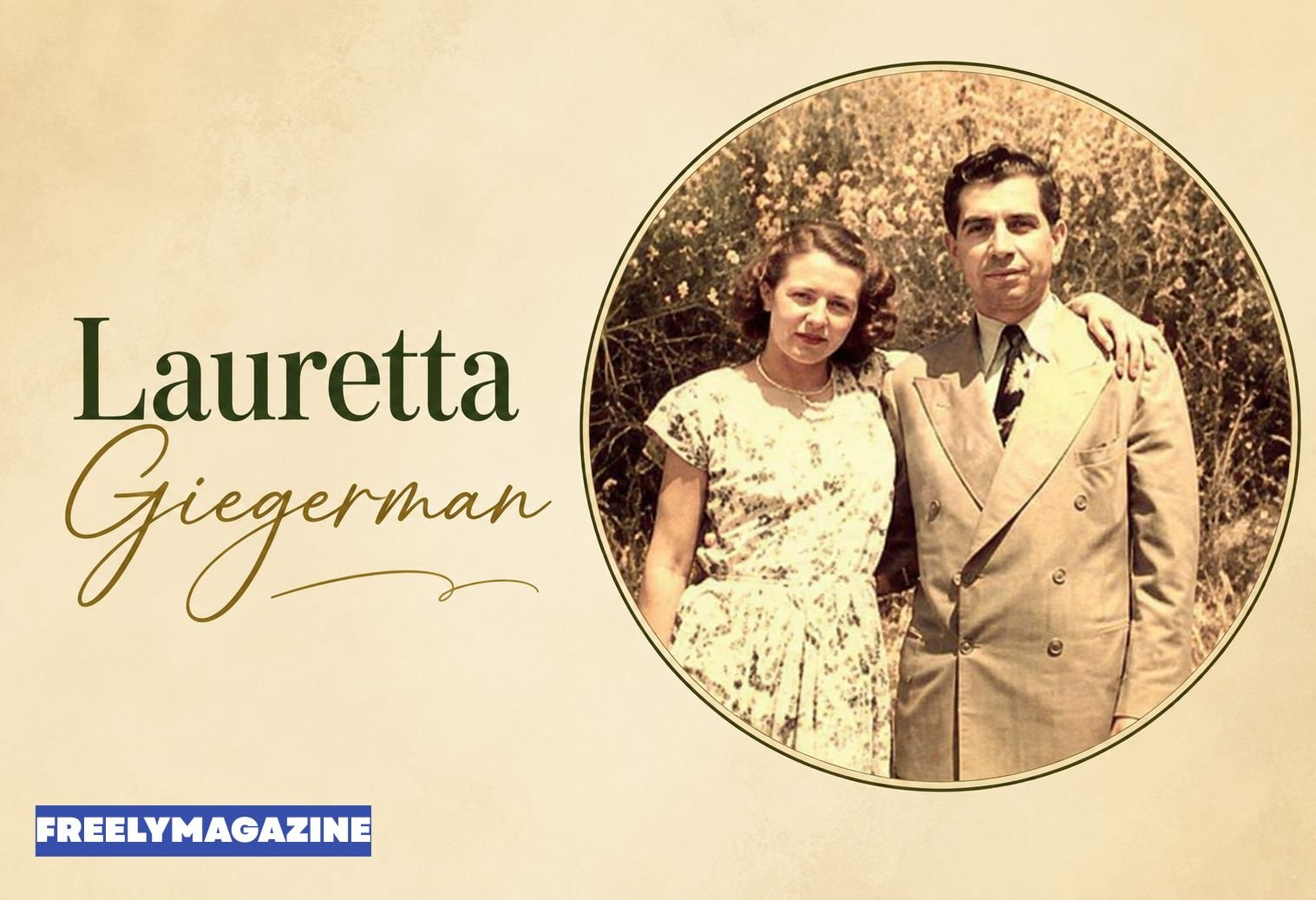
Lauretta Giegerman spent decades standing just outside the spotlight that followed her husband, Frank Costello, one of the most powerful organized crime figures in American history. While Costello’s name filled newspaper headlines, congressional transcripts, and mob history books for half a century, Lauretta’s own story remained scattered across federal records, old marriage indexes, and a handful of contemporary press mentions. This article brings those pieces together into a single, fact-checked account of who she was, how she lived, and what history can and cannot confirm about her life.
Who Was Lauretta Giegerman?
Lauretta Giegerman was the longtime wife of Frank Costello, the New York crime boss once nicknamed the “Prime Minister of the Underworld.” She is also identified in various records as Loretta Geigerman, Loretta B. Costello, and, informally, as “Bobbie” or “Bobby” Costello.
Quick Facts
| Detail | Information |
|---|---|
| Born | October 28, 1894, Manhattan, New York |
| Also known as | Loretta Geigerman, Loretta B. Costello, Bobbie/Bobby Costello |
| Spouse | Frank Costello (m. 1914) |
| Spouse’s real name | Francesco Castiglia |
| Children | None (marriage described as childless) |
| Known for | Wife of Frank Costello; named sole heir to his estate |
| Death | Exact date not firmly documented |
Why She’s Also Called Loretta Geigerman, Bobbie, or Bobby Costello
Name confusion is common in Lauretta’s case. Newspapers of the era used the nickname “Bobby,” which modern sources often render as “Bobbie.” Legal and federal documents typically use “Loretta B. Costello” or list her maiden name as “Geigerman” rather than “Giegerman.” An FBI index entry identifying Frank Costello’s wife lists both name forms directly, which is one of the clearer pieces of evidence tying all these variants to the same woman.
Early Life and Family Background
Birth and Childhood in Manhattan (1894)
Lauretta was born on October 28, 1894, in Manhattan, during a period when New York County was absorbing waves of immigrants and transforming into a global commercial center. Detailed accounts of her childhood are sparse, which was typical for private women of that generation who left few personal records behind.
Parents — Jacob Geigerman and Cecelia Josephs
Genealogical and city marriage records identify her father as Jacob H. Geigerman and her mother as Cecelia (also recorded as Celie) Josephs. A Manhattan marriage index places their wedding in 1888, several years before Lauretta’s birth.
German-Jewish Family Roots
Lauretta’s family background is generally identified as German-Jewish, which placed her within one of Manhattan’s established immigrant communities. This is notable because Frank Costello came from an Italian Catholic family, meaning their eventual marriage crossed both ethnic and religious lines — a detail rarely discussed in mainstream mob histories.
Siblings (Dudley, Harold, Ruth, and Others)
Family records list a large sibling group, including Ruth, Harold, Jessie, Jerome, Sidney, Theodore, and William. Two of her brothers, Dudley and Harold Geigerman, later resurfaced in an unexpected context: Senate testimony connected them to a business called Bayou Novelty Co., alongside associate Philip Kastel, who confirmed under questioning that the Geigermans were related to Frank Costello by marriage.
Education and Early Adulthood
No detailed school records for Lauretta have surfaced. Basic public schooling was standard for Manhattan children of her era, but claims about specific schools or advanced education should be treated as unverified rather than fact.
Was Lauretta Giegerman a Showgirl?
The TIME Magazine Reference
The most credible source for this claim is a 1949 TIME magazine profile, which referred to her using the nickname “Bobby” and described her as an “onetime show girl.” This is a contemporary, named-publication reference, which gives it more weight than most modern retellings.
Fact vs. Unverified Broadway Claims
Many websites have since expanded this brief mention into a full Broadway or vaudeville career, complete with specific shows and theaters. No solid documentation supports those expanded claims. The responsible conclusion is that she was reportedly a showgirl before her marriage, without confirmed production credits.
How She Met and Married Frank Costello
Their Courtship
Frank Costello was still using his birth name, Francesco Castiglia, when he and Lauretta became involved. One historical account describes her as the younger sister of one of Frank’s close companions, with the relationship developing through that connection during New York’s tightly knit immigrant neighborhoods.
1914 vs. 1918 — Resolving the Marriage Date Conflict
Sources disagree on the wedding year. Some modern biographies cite 1918, but stronger, more established historical accounts place the marriage in September 1914 — with specific dates of either September 22 or September 23, 1914, appearing in different biographies. The 1914 date aligns more closely with the broader timeline of Frank’s early adoption of the Costello surname, making it the more historically reliable figure.
Who Was Frank Costello? (Quick Background)
From Francesco Castiglia to “Prime Minister of the Underworld”
Frank Costello built his reputation through gambling operations, bootlegging during Prohibition, and an unusually deep network of political relationships. He was known for favoring negotiation and influence over open violence, which helped him become one of the most durable power brokers in American organized crime. His 1951 appearance before the Kefauver Committee, a Senate investigation into organized crime, became one of the defining public moments of his career.
Key Associates — Luciano, Lansky, Genovese
Costello’s underworld network included Lucky Luciano, Meyer Lansky, and Bugsy Siegel, while Vito Genovese later became his most significant leadership rival. Other associates included Gaetano Lucchese and Ciro Terranova, figures tied to New York’s broader Mafia infrastructure.
Marriage and Private Life
Life as a Crime Figure’s Wife
Frank’s criminal career brought constant government investigation, press scrutiny, and rival threats. Lauretta, by contrast, rarely gave interviews or appeared at public events. No credible evidence places her inside Costello’s criminal operations; her documented presence in official records relates almost entirely to marriage and shared finances.
The Central Park West Apartment (The Majestic)
The couple’s primary residence was a seven-room apartment, reportedly renting for about $3,600 a year according to the 1949 TIME profile, which also noted a maid who had worked in the household for 15 years. Later accounts place the apartment specifically in the Majestic at 115 Central Park West, unit 18F, decorated by James Mont, and describe a gold-plated grand piano among its furnishings — details that should be read as later embellishment layered onto the more sparsely documented contemporary account.
The Sands Point Summer Home
TIME also described a 12-room summer home in Sands Point, valued at roughly $34,000, where Frank reportedly kept a small peach orchard.
Did They Have Children?
Frank and Lauretta had no children. TIME’s 1949 profile explicitly described them as a childless couple, and later biographies consistently repeat this detail without dispute.
Was Lauretta Involved in Organized Crime?
No reliable record identifies Lauretta as an operator within Costello’s criminal enterprises. Her name appears in federal tax litigation, but strictly as his wife and joint taxpayer — a financial designation, not evidence of criminal participation. Historians generally treat her as a private spouse whose proximity to organized crime came entirely through marriage.
The 1957 Assassination Attempt on Frank Costello
What Happened
On May 2, 1957, Frank survived a shooting in the lobby of his Central Park West apartment building, sustaining a scalp wound. Vincent “The Chin” Gigante was later associated with the attack.
Lauretta’s Rare Public Appearance Afterward
Lauretta accompanied Frank through the hospital and police aftermath on May 3, 1957, one of the few times she was photographed publicly — press images reportedly show her shielding part of her face from cameras. Theatrical agent William Kennedy was also present that evening before Frank was taken to a police station for questioning.
Tax Records and Legal History
Joint Tax Cases With Frank
Federal tax disputes followed Costello for decades, with some filings covering years as early as 1927–1928 and continuing into the 1940s. Loretta B. Costello appeared as a joint petitioner in several of these proceedings.
The 1976 Tax Court Case
The most significant record is Frank Costello, Deceased, and Loretta B. Costello v. Commissioner, decided by the U.S. Tax Court on December 29, 1976, covering tax years from 1941 through 1954. Stipulated decisions against Loretta were entered on July 20, 1976.
The Geigerman Family and Bayou Novelty Co.
Senate testimony tied brothers Dudley and Harold Geigerman to Bayou Novelty Co., with associate Philip Kastel confirming their family relationship to Costello — a rare instance of Lauretta’s extended family surfacing in organized crime investigations.
Frank Costello’s Death and Aftermath
His Death in 1973
Frank Costello died on February 18, 1973, at age 82, following a heart attack. He was buried at St. Michael’s Cemetery in Elmhurst, in a private mausoleum that was later bombed in 1974, an act linked to Carmine Galante.
Lauretta Named Sole Heir
Because Frank died intestate, the Tax Court formally identified Loretta as his widow and sole heir, giving her a clearly documented legal position after his death.
Her Life After His Death
Lauretta remained active in legal proceedings tied to Frank’s estate through at least 1976, but never became a public figure in her own right.
When Did Lauretta Giegerman Die?
No firmly established death date exists. Since federal records confirm her involvement in litigation during 1976, any claim placing her death in 1973 alongside Frank’s can be ruled out.
Lauretta Giegerman in The Alto Knights (2025)
Debra Messing as “Bobbie Costello”
The 2025 film The Alto Knights, directed by Barry Levinson and released by Warner Bros. Pictures on March 21, 2025, reintroduced the couple to modern audiences. Debra Messing portrayed Bobbie Costello opposite Robert De Niro, who played both Frank Costello and rival Vito Genovese.
Fact vs. Film Dramatization
The film gives Bobbie a more prominent, emotionally influential role than historical records support. Viewers should treat the dramatized version as creative interpretation rather than documented biography.
Fact-Checking Lauretta Giegerman — Myths vs. Verified History
Repeated online claims — detailed Broadway credits, specific children, or an exact death date — generally lack primary sourcing. The most reliable anchors remain the 1949 TIME profile, the FBI index entry, marriage and genealogical records, and the 1976 Tax Court decision. Anything beyond these should be treated as reported rather than proven.
Legacy and Historical Significance
Lauretta Giegerman’s story illustrates how the families of powerful historical figures often disappear from the historical record even while living through the same major events. Her documented life — marriage, the 1957 shooting aftermath, and federal tax litigation — offers a rare, grounded glimpse into the private side of one of America’s most famous organized crime careers.
Conclusion
Lauretta Giegerman’s life is best understood through documented facts rather than repeated online speculation: a 1914 marriage to Frank Costello, a childless household split between Manhattan and Sands Point, a rare public appearance after the 1957 shooting, and a clear legal record as Costello’s sole heir following his 1973 death. Her story remains a quiet but real thread in American organized crime history — one defined less by fame than by proximity to it.
More Celebrity Biography Profiles: Joylette Goble Hylick: Katherine Johnson’s Daughter, Her Own NASA Career, and the Family Legacy She Carries Forward
FAQs
Who was Lauretta Giegerman?
She was the longtime wife of Frank Costello, also recorded as Loretta Geigerman or Loretta B. Costello.
Was Lauretta Giegerman married to Frank Costello?
Yes, most reliable sources place their marriage in September 1914.
Did Lauretta Giegerman have children?
No, contemporary reporting described the marriage as childless.
Was Lauretta Giegerman a showgirl?
A 1949 TIME profile described her as an “onetime show girl,” though detailed career credits remain unconfirmed.
When was Lauretta Giegerman born and when did she die?
She was born October 28, 1894, in Manhattan; her exact death date is not firmly established.
Why is Lauretta Giegerman called Loretta Geigerman or Bobbie Costello?
Name variations stem from newspaper nicknames, federal record spellings, and her married surname.
Who played Lauretta Giegerman in The Alto Knights?
Debra Messing played her as “Bobbie Costello” in the 2025 film.
