


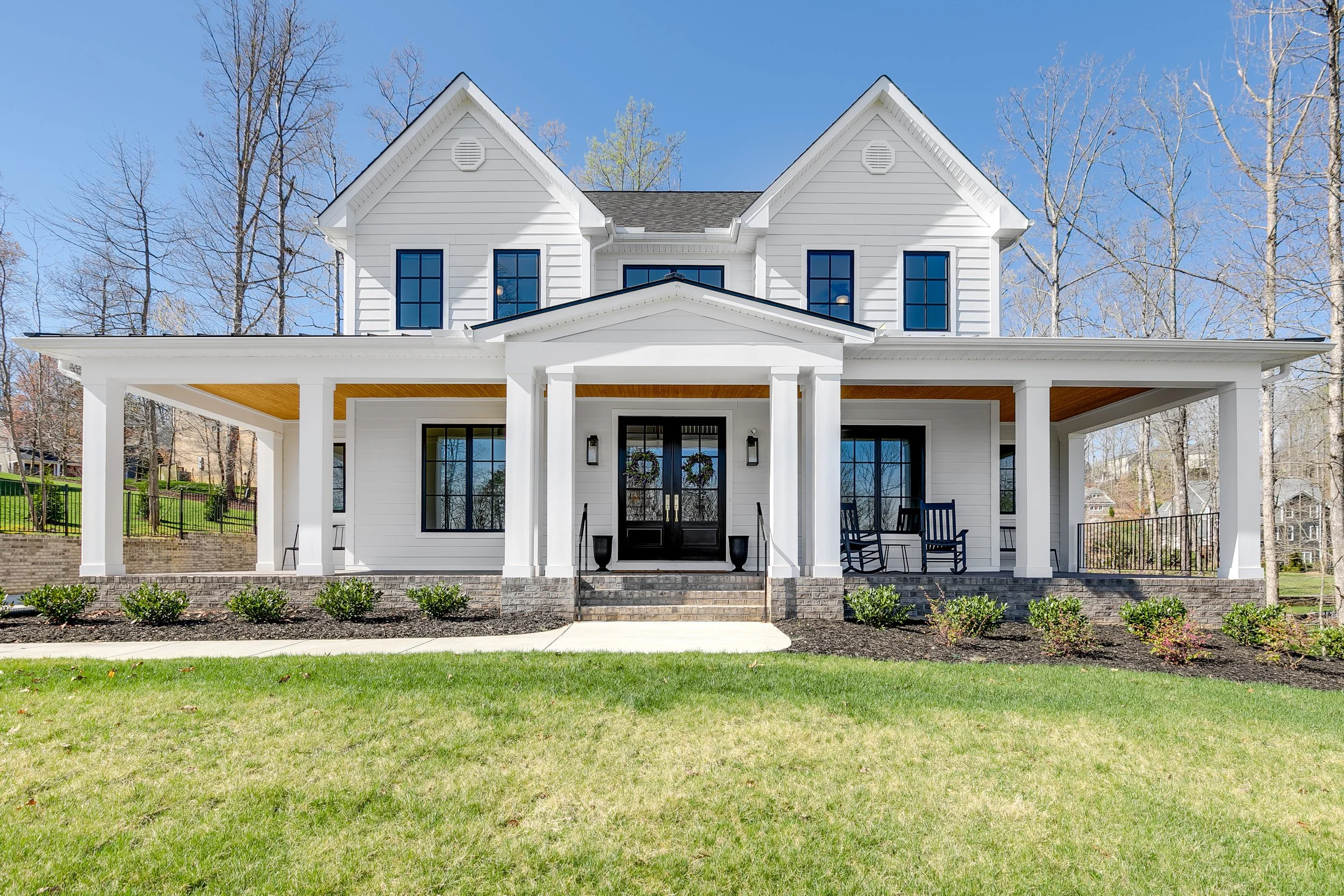
The term ‘custom’ does little to help the custom home client who expects near total control of their project. In reality a series of narrowing constraints, some fixed by the laws of physics and others by the stringent requirements of local government through planning controls, are set in place as other decisions are fixed in a particular order. Understanding which of these constraints can be flexed and when they can no longer be changed is key to ensuring any change is absorbed by the project with minimum impact on contingency rather than causing the project to ‘bleed’ contingency.
The site sets the outer boundary before anyone draws a line
The land on which a new home is to be built determines the largest single factor influencing the degree of design flexibility available to a new home client. In most cases the client will have purchased the land before engaging a designer to develop a home design for the property.
A reactive site on a cross-fall may end up costing more in footings and retention. This will not form part of the kitchen budget.
Questions worth answering before contracts on land
- What does the buildable envelope look like once setbacks, easements and overlays are applied?
- What is the soil classification, and what footing system does it imply?
- Where do services connect, and what is the cost of extending them?
- Does the orientation support the glazing and living arrangement the client wants, or will it fight it?
- Is a planning permit required, and what does that add in time and risk?
Floor plans flex more than structure does
While the spatial arrangement is probably the area that the homeowner feels they have the greatest degree of flexibility, the reality is that once the spatial arrangement has been fixed (and this is usually within the documentation stage), the arrangement of non-load bearing walls is set, within limitations of course. Wet areas for example are a significant cost to relocate after slab pour and can involve numerous penetrations, re-routing of services and potentially variations to the plumbing contract.
Plan rooms and areas and adjacencies and wet areas prior to structural commencement, and after that the plan is set in concrete even though drawings still look changeable.
Volume is cheaper to change than footprint
Adding height to a home by increasing the ceiling height, introducing a void or changing the roof pitch can often add presence to a home without costing too much more than extending the floor plate. However, the floor plate will dictate the footings, slab, roof area and external cladding.
Where flexibility actually sits, stage by stage
| Decision area | Freedom early | Freedom after contract signing | Typical cost of late change |
| Site and orientation | High | None | Not recoverable |
| Floor plan and footprint | High | Very limited | Redocumentation, re-engineering, permit amendment |
| Structural system | Moderate | None | Full redesign |
| Window and door schedule | High | Low, before order release | Lead time loss, energy rating recheck |
| Internal finishes | High | Moderate | Variation margin, program delay |
| Fixtures, tapware, hardware | High | High, until procurement | Usually price difference only |
Finishes feel flexible, and mostly are, until procurement
Some selections, like tile and stone finishes, have no structural consequences. Others, like kitchens and bathrooms, have loads of consequences and are selected far too late. Once an order has been placed with a supplier for products like these, the risk of having to restock and the consequent impact on program far outweigh any design consequence of a change of this sort.
The two biggest structural issues of your selections are tall-format tiles and stone, and appliances and sanitaryware. Their structural impact is often hidden from the client but causes rework when decisions are postponed until it is time to select finishes.
A workable selections sequence
- Appliances, sanitaryware and tapware, because they dictate rough-ins.
- Tile and stone formats, because they dictate substrates and set-out.
- Joinery design and internal doors.
- Paint, hardware and soft finishes, which can run until close to handover.
Process design determines how much change you can absorb
A fixed price contract over fully documented drawings will provide cost certainty but very little flexibility for further change. A cost plus contract or a Construction Management contract, however, allows for a lot of flexibility well into the contract and transfers the risk of variations to the client.
There is a middle way, a well-run design and construct process where decisions are made within a clearly defined budget structure (allowances and provisional sums) and cost variations can be processed efficiently by the builder once documentation is complete and a solid baseline established. Builders who work this way, such as those delivering custom homes in Stark County, are worth seeking out because the structure is what keeps late decisions affordable.
Three habits that preserve options without inflating cost
- Hold a contingency of five to ten percent and treat it as a decision fund, not a buffer for errors.
- Identify long-lead items at tender and commit to them first.
- Record every selection against a dated schedule so a change has a visible price and program consequence.
Your budget for flexibility will be spent on the land and the plans prior to procurement, protected throughout the procurement process and then spent on the finishes.
