


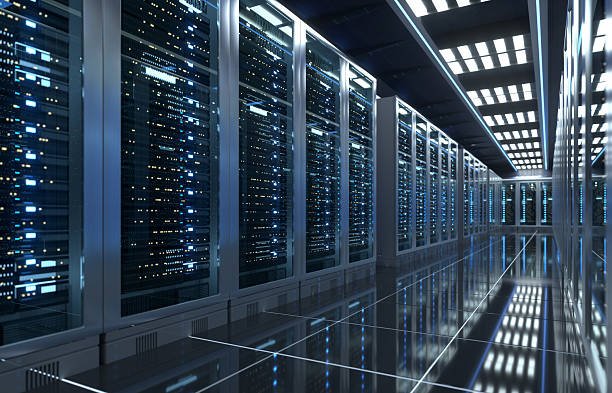
When we talk about “the cloud,” it sounds weightless. In reality, it is a collection of very physical buildings full of machines, connected by thousands of kilometres of glass fibre. Understanding what happens inside those buildings, and how data gets in and out, helps explain why modern digital life works as smoothly as it does.
Data travels as light
Most of the world’s internet traffic moves through fibre-optic cables. Instead of electrical signals in copper wire, these cables carry pulses of light through hair-thin strands of glass. Light travels fast, loses little energy over distance and can carry many separate channels at once through a technique called wavelength division multiplexing.
At each end of a link, specialised equipment converts electrical signals to light and back again. This is the domain of Optical Communications technology, which includes transceivers, transmission modules and related components. As demand for bandwidth grows, these products are steadily becoming faster, denser and more energy-efficient.
Inside the building
Once data reaches a facility, it enters a carefully organised environment. Servers, storage arrays and network switches sit in standardised racks arranged in rows called aisles. Cold air is delivered to the front of the racks, and hot air is extracted from the back, a layout known as hot-aisle and cold-aisle containment. Power arrives through distribution units, usually with battery and generator backup behind them.
Everything is designed around three goals: keep the equipment powered, keep it cool and keep it connected.
Why AI changes the rules
Traditional servers draw a modest amount of power per rack. Artificial intelligence workloads are different. Graphics processors and other accelerators pack enormous computing power into each unit, and a single rack can consume several times the electricity of a conventional one. The heat generated rises accordingly.
That is forcing a rethink of physical design. Purpose-built AI Data Centre Racks address higher weight, power density and thermal demands, with attention to airflow, cable management and power distribution. In some of the most intensive deployments, operators also adopt liquid cooling to remove heat more effectively than air alone.
The role of cabling and connectivity
AI clusters need to move data between processors at extreme speeds, so the network inside the building matters as much as the hardware itself. High-speed optical links connect servers to switches and switches to each other. Poor cabling can create bottlenecks that leave expensive processors waiting for data.
Tidy, well-documented cabling also makes maintenance easier and reduces the risk of accidental disconnection. It may not be glamorous, but it is one of the most underrated aspects of a healthy facility.
Efficiency and sustainability
Data facilities account for a noticeable share of global electricity use, and that share is expected to grow with AI adoption. The industry measures efficiency with a metric called Power Usage Effectiveness, or PUE, which compares total facility power to the power used by computing equipment. A value closer to 1.0 means less energy is wasted on cooling and overhead.
Operators improve PUE through smarter cooling, better airflow management, efficient power conversion and, increasingly, renewable energy sourcing. Waste heat is even being reused in some places to warm nearby buildings.
What to consider when planning a facility
Whether you are building a large site or upgrading a small server room, these questions are a good start:
- What power density will each rack need, now and in five years?
- Can the cooling system handle peak loads in summer?
- Is there enough fibre capacity and diversity for growth and resilience?
- How easily can racks and cabling be expanded or replaced?
- What monitoring is in place for temperature, power and equipment health?
Looking forward
Data demand shows no sign of slowing. Video, cloud services, connected devices and AI all push facilities to handle more traffic and more computing in the same footprint. The winners will be those who combine fast optical connectivity with racks and power systems built for the loads of tomorrow rather than yesterday.
The cloud may feel intangible, but it is anchored by glass, copper, steel and electricity. Knowing how those pieces fit together is the first step to understanding the digital world we rely on every day.
