


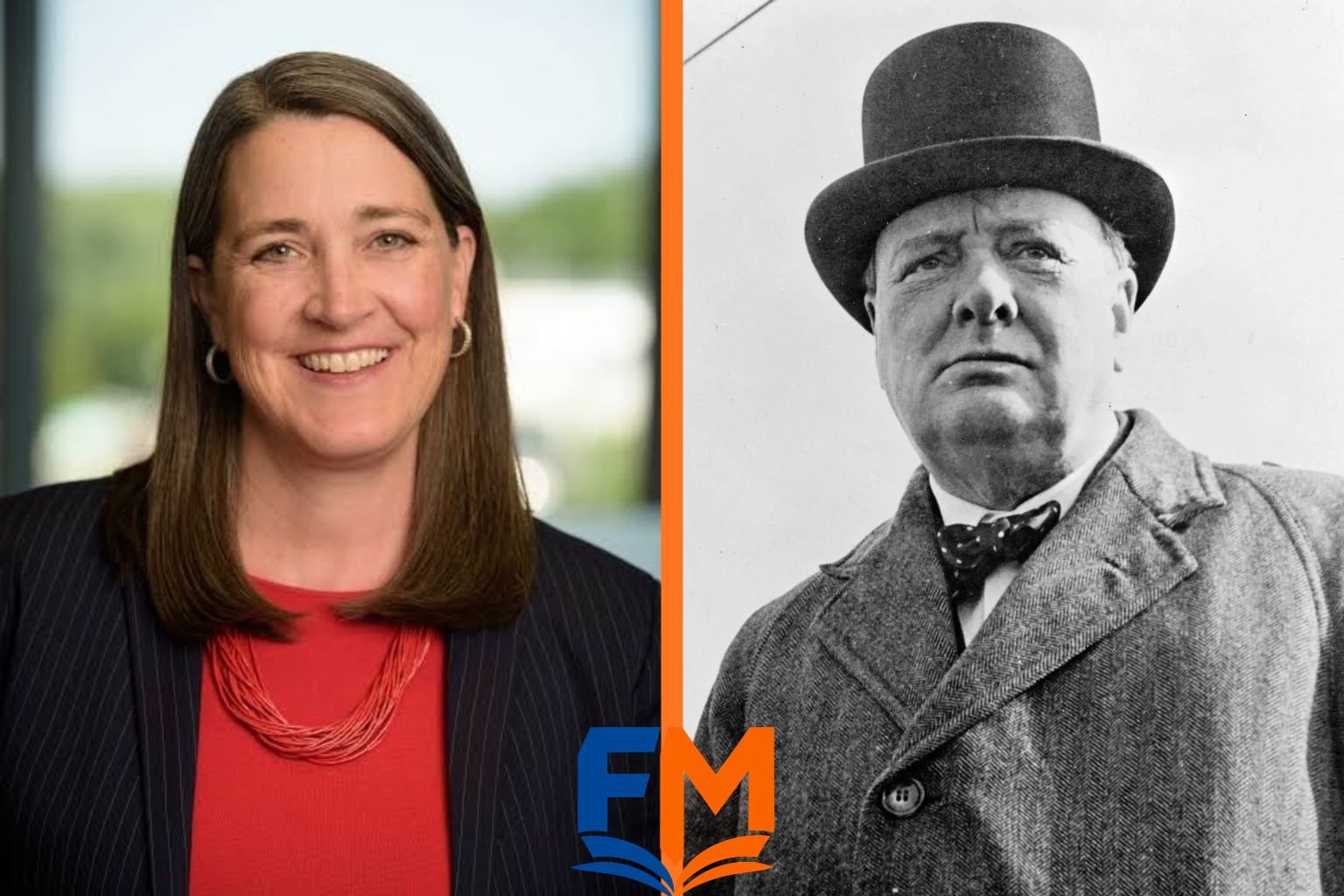
Patricia Poppe and Winston Churchill are not connected. There is no verified family, personal, or professional link between the American utility executive and Britain’s wartime prime minister. People compare them because both led through crisis and public scrutiny. This guide covers the facts on each, a side-by-side comparison, and what the contrast teaches about leadership.
Quick Answer: Are Patricia Poppe and Winston Churchill Connected?
No. Churchill died in 1965, decades before Poppe’s career in engineering and energy began. No credible source records a meeting, collaboration, or shared organization.
Are Patricia Poppe and Winston Churchill Related?
There is no genealogical evidence that they are. A shared search phrase proves nothing about family ties. A real claim would need authenticated records.
Did Patricia Poppe Ever Work With or Cite Winston Churchill?
They never worked together, and no reliable interview or speech shows Poppe naming Churchill as an inspiration. Any such claim needs a primary source.
Why Do Their Names Appear Together in Searches?
Writers often compare leaders from different fields to study decision-making, communication, and accountability. The pairing is editorial, not biographical.
Who Is Patricia Poppe?

Patricia K. Patti Poppe is an American executive who rose from manufacturing and plant operations to run one of the largest utilities in the United States.
Patricia Poppe at a Glance
| Fact | Detail |
| Full name | Patricia K. Poppe |
| Role | CEO, PG&E Corporation |
| Started at PG&E | January 4, 2021 |
| Previous role | CEO, CMS Energy and Consumers Energy (2016) |
| Education | Purdue (BS, MS industrial engineering); Stanford GSB (MS management) |
Education: Purdue and Stanford
Poppe earned bachelor’s and master’s degrees in industrial engineering at Purdue, then a management master’s at Stanford’s Graduate School of Business. Industrial engineering studies how people, equipment, and processes fit together, which explains the operational focus of her career.
From General Motors to the Energy Industry
Poppe worked at General Motors for 15 years in various roles before joining DTE Energy. That path ran through plant management and a power plant directorship, so her executive career grew out of operational work.
Leading CMS Energy and Consumers Energy
Poppe joined Consumers Energy in 2011 and became president and CEO of CMS Energy and Consumers Energy in 2016. Safety incidents there fell 70% from 2008, and in 2019 Consumers ranked in the top quartile of Edison Electric Institute safety performance.
Becoming CEO of PG&E Corporation
Her hiring came nearly five months after PG&E emerged from one of the most complex bankruptcies in U.S. history, caused by wildfires ignited by its grid. More than 120 people died in wildfires linked to PG&E’s outdated equipment in 2017 and 2018. PG&E serves about 16 million people, roughly double CMS Energy’s customer base.
Wildfire Safety and the Underground Power Line Plan
PG&E has filed a 10-year plan to bury roughly 5,000 miles of distribution lines from 2028 to 2037. The company says undergrounding cuts ignition risk by nearly 98% and outages by 90% in targeted areas. It also claims $117 billion in long-term benefits and about $6 billion in avoided maintenance costs. Cumulative undergrounding is expected to pass 1,900 miles by the end of 2027. These are company projections, not completed results. Reporting notes the plan scales back an earlier 10,000-mile ambition by about 30%, and ratepayer advocates praised the reduction.
Affordability, Reliability, and Public Accountability
PG&E’s $73 billion five-year capital plan is unchanged. Bigger capital spending raises bills, and customers judge utilities by cost and reliability. First-quarter 2026 net profit was $885 million. Whether safety gains justify the rate burden remains a live debate.
Who Was Winston Churchill?
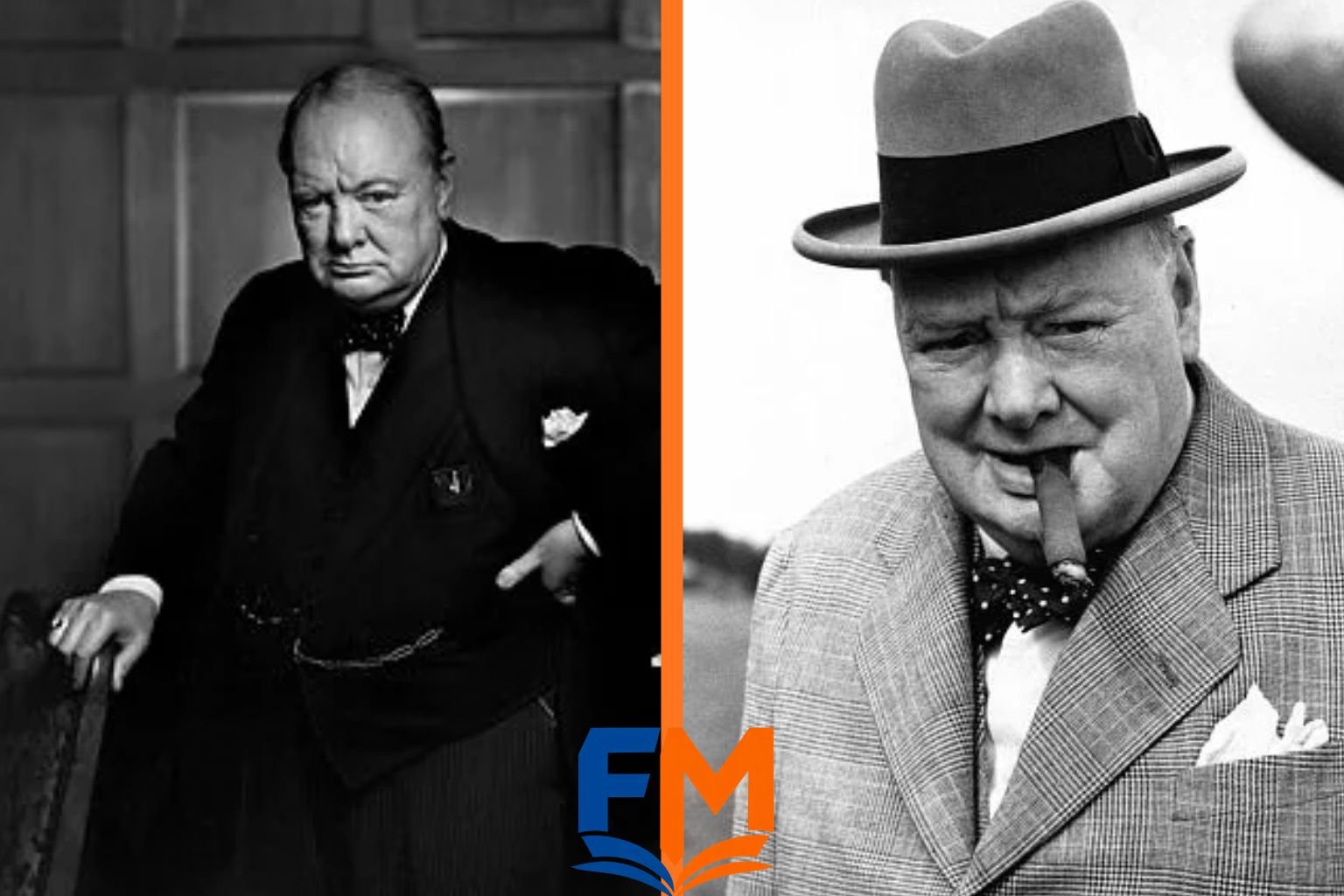
Sir Winston Leonard Spencer Churchill was a soldier, journalist, author, and statesman. He is best remembered for leading Britain through World War II.
Winston Churchill at a Glance
| Fact | Detail |
| Born | November 30, 1874, Blenheim Palace |
| Died | January 24, 1965, aged 90 |
| Prime minister | 1940–1945; 1951–1955 |
| Major award | Nobel Prize in Literature, 1953 |
Childhood and Education
His father was Lord Randolph Churchill, a politician, and his mother, Jennie Jerome, was American. He attended Harrow and then Sandhurst, an aristocratic start far removed from a modern corporate career.
Military Service, Journalism, and Early Politics
Commissioned into the 4th Hussars in 1895, Churchill reported on campaigns and published books that built his fame and income. He entered Parliament in 1900 for Oldham and became First Lord of the Admiralty in 1911.
The Gallipoli Setback and the Wilderness Years
The failed Dardanelles and Gallipoli operations of 1915 badly damaged his standing. His career included exclusion and recovery, so a biography of only his peak misses much of the story.
Leading Britain During World War II
Churchill became prime minister on May 10, 1940, as Germany advanced across Europe. His government faced Dunkirk, the threat of invasion, and the Blitz. He sustained cooperation with Franklin D. Roosevelt and, after 1941, Joseph Stalin. Victory also depended on armed forces, civilians, Commonwealth nations, and allies.
Writing, the Nobel Prize, and Later Life
His books include The World Crisis and The Second World War. The 1953 Nobel Prize in Literature honored his historical writing and oratory, not peace work, a common mix-up. He remained in Parliament until 1964.
Empire, Race, and Churchill’s Contested Legacy
His resistance to Hitler is central to his reputation. So are his imperial convictions, his opposition to Indian self-rule, and his government’s response to the 1943 Bengal famine, which historians still debate and for which estimates of deaths run into the millions.
Patricia Poppe vs. Winston Churchill: Side-by-Side Comparison
Comparison Table
| Factor | Patricia Poppe | Winston Churchill |
| Field | Business, energy | Politics, government |
| Role | CEO, PG&E | Prime Minister |
| Era | 21st century | 20th century |
| Core challenges | Wildfire risk, trust, affordability | World War II, national survival |
| Accountable to | Board, regulators, customers, investors | Parliament, voters, allies, history |
| Success measured by | Safety, reliability, cost | Policy, security, institutions |
Corporate Authority vs. Political Authority
A CEO works within regulation, board oversight, and shareholder expectations. A prime minister directs military strategy and national policy. The stakes and the powers differ in kind, not just in scale.
Leadership Styles Compared
Poppe’s Operational, Safety-First Approach
Poppe’s style reflects engineering training: process discipline, measurable safety targets, and cost reduction. PG&E says its undergrounding cost per mile has fallen about 25%.
Churchill’s Communication-Driven, Wartime Approach
Churchill led through speeches, national symbols, and personal resolve while directing strategy with allies. His rhetoric mattered, but it worked alongside military and industrial effort.
How Each Leader Is Judged: Results vs. Rhetoric
Poppe is judged on data such as ignitions, outages, and bills. Churchill is judged on historical outcomes and moral consequences. Strong words never replace sound decisions in either case.
What Do Patricia Poppe and Winston Churchill Have in Common?
Leading Through Crisis and Public Distrust
Both took charge when confidence was weak. The scale is incomparable, since a utility’s recovery is not a nation’s survival, but each leader had to act before trust returned.
Communicating With Critical Audiences
Churchill addressed Parliament, the public, and allies. Poppe addresses regulators, investors, employees, and customers. Clarity and credibility count in both.
Working Within Complex Institutions
Neither acted alone. Churchill relied on a coalition and allies, while Poppe works under a board, regulators, and public authorities.
Making Decisions Under Uncertainty
Wartime intelligence was incomplete, and wildfire risk models are probabilistic. Both leaders had to choose, then adjust as new information arrived.
Facing Public and Historical Accountability
Churchill faced elections and still faces historians. Poppe faces regulators, investors, and ratepayers, and her record is still being written.
Career Timelines
Patricia Poppe’s Career Timeline
| Year | Milestone |
| Early career | 15 years at General Motors |
| 2005 | Joins DTE Energy |
| 2011 | Joins Consumers Energy |
| 2016 | CEO of CMS Energy and Consumers Energy |
| 2021 | CEO of PG&E |
| 2026 | PG&E files 10-year undergrounding plan |
Winston Churchill’s Career Timeline
| Year | Milestone |
| 1874 | Born |
| 1900 | Elected to Parliament |
| 1911 | First Lord of the Admiralty |
| 1915 | Gallipoli setback |
| 1940 | Becomes prime minister |
| 1945 | Leaves office after general election |
| 1951 | Returns as prime minister |
| 1953 | Nobel Prize in Literature |
| 1955 | Resigns |
| 1965 | Dies in London |
Why Historical Context Matters When Comparing Leaders
An energy executive today deals with modern regulation, climate risk, and capital markets. Churchill faced total war and empire. Ignoring these settings produces false equivalence, so context is the first thing to check in any comparison.
5 Leadership Lessons From Patricia Poppe and Winston Churchill
1. Understand the Problem Before You Act
Gather reliable information and rank the biggest risks first. PG&E’s risk modeling targets undergrounding where it cuts the most fire risk.
2. Communicate Clearly in Uncertain Moments
Explain what is happening, why, and what comes next. Clarity beats drama.
3. Build Teams, Not Personality Cults
Large outcomes need engineers, crews, advisers, and allies. Leaders who credit only themselves misread how results happen.
4. Adapt When the Evidence Changes
PG&E’s reduced undergrounding scope shows a plan revised after cost scrutiny. Churchill’s career shows the cost of strategic errors like Gallipoli.
5. Own the Consequences of Your Decisions
Judge leaders on who bore the costs as well as on headline achievements. That applies to rate hikes and to colonial policy alike.
Common Myths and Misunderstandings
| Myth | Fact |
| They were relatives | No verified relationship exists |
| They worked together | Their careers never overlapped |
| They share a leadership philosophy | Similarities are analytical, not documented |
| A CEO and a prime minister are equivalent | Their powers and stakes differ fundamentally |
| Churchill’s record is universally admired | It includes serious, well-documented criticism |
| The Nobel was a peace prize | It was for literature |
How to Research Public Figures Without Being Misled
Separate three categories:
- Biographical facts: dates, roles, education.
- Documented connections: relationships proven by reputable records.
- Interpretive comparisons: observations that do not prove any link.
Check claims against primary sources such as PG&E’s official leadership page, the Nobel Prize website, and the Churchill Archive.
Conclusion: What the Comparison Really Teaches Us
Patricia Poppe and Winston Churchill share no documented link, only a theme: leading under pressure and public judgment. Poppe’s record is still unfolding through safety data and rate decisions. Churchill’s is fixed, and it holds both triumph and controversy. The lesson is to weigh evidence, keep context in view, and ask who bore the consequences.
More Celebrity Biography Profiles: Bruno Mars vs Denzel Washington: Family Link, Careers, Awards & Facts
Frequently Asked Questions
What is the relationship between Patricia Poppe and Winston Churchill?
None has been verified. They are compared as leaders only.
Who is Patricia Poppe and why is she famous?
She is the CEO of PG&E Corporation, known for leading Consumers Energy and then guiding PG&E’s post-bankruptcy safety and wildfire-mitigation effort.
What was Winston Churchill best known for?
Leading Britain against Nazi Germany as prime minister, and for his writing and oratory.
Did Patricia Poppe ever say Churchill inspired her?
No reliable source shows that she did.
What did Patricia Poppe study?
Industrial engineering at Purdue and management at Stanford.
How did Patricia Poppe become CEO of PG&E?
After leading CMS Energy and Consumers Energy, she was named PG&E CEO in November 2020 and started January 4, 2021.
Why did Churchill win the Nobel Prize in Literature?
For his historical and biographical writing and his oratory.
Was Churchill’s leadership controversial?
Yes. His wartime role is widely praised, while his imperial and racial views and decisions such as the Bengal famine response draw heavy criticism.
What is the biggest difference between the two leaders?
Poppe leads a regulated company. Churchill led a nation at war.
What can professionals learn from comparing them?
Judge leadership by preparation, decisions, and effects on affected people, not by image.

1 Comment
Pingback: Lowell McAdam and Tom Kennedy: Biography, Career Timeline, and Key Differences - FreelyMagazine